~From Four Basic Principles of Numerology, Frank Householder, 1921~
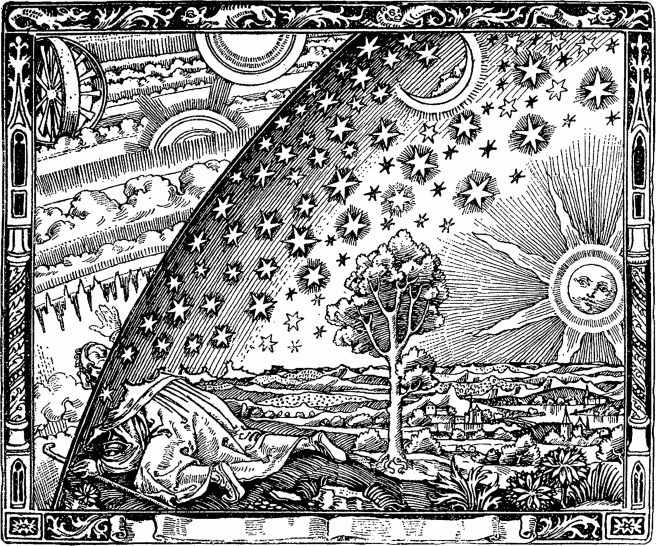
Flammarion, 1888
The Cosmos is infinite. I am a part
Of the Cosmos, its head and its heart.
If God include all, shall He not compass me?
If He is, then I am. If I am, is not He?
No matter how infinitesimal I,
I am one with infinity. Why should I cry
I am nothing, if nothingness still may include
The desire and the dream of all Infinitude?
I am small? Be it so. But I also am great
While my smallness is part of God’s ample estate.
~From Facts and Problems of Rabies~
by Arthur Stimson, 1910
“The onset of rabies is usually rapid. The patient usually shows some psychical change very early, becoming anxious, melancholy, and oppressed with a strange pre-
sentiment of harm…” Continue reading →
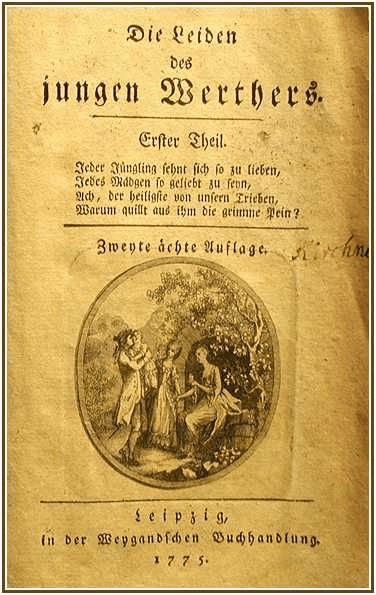
This inconspicuous looking text was the impetus behind a rash of suicides in the late 18th century. Written by Goethe, this epistolary novel followed the sorrows of a young man whose true love is betrothed to another. The book accounts the man’s decent into depression and ultimately suicide.
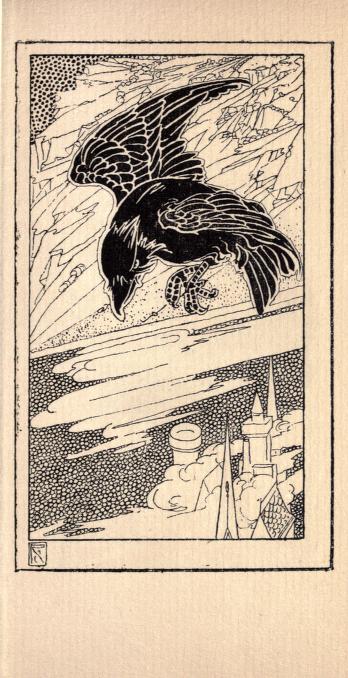
A Crow, ready to die with thirst, flew with joy to a Pitcher, which he saw at a distance. But when he came up to it, he found the water so low that with all his stooping and straining he was unable to reach it. Thereupon he tried to break the Pitcher; then to overturn it; but his strength was not sufficient to do either. At last, seeing some small pebbles lie near the place, he cast them one by one into the Pitcher; and thus, by degrees, raised the water up to the very brim, and quenched his thirst.”
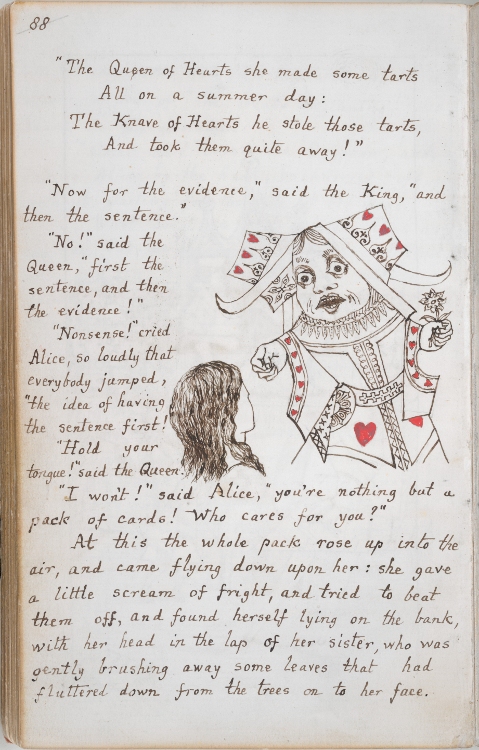
A hand-written page from Lewis Carrol’s original manuscript copy of what would be Alice’s Adventures in Wonderland. In 1863, when this page was written, the story was known as Alice’s Adventures Under Ground. Illustrations are by the author himself. From the British Library.
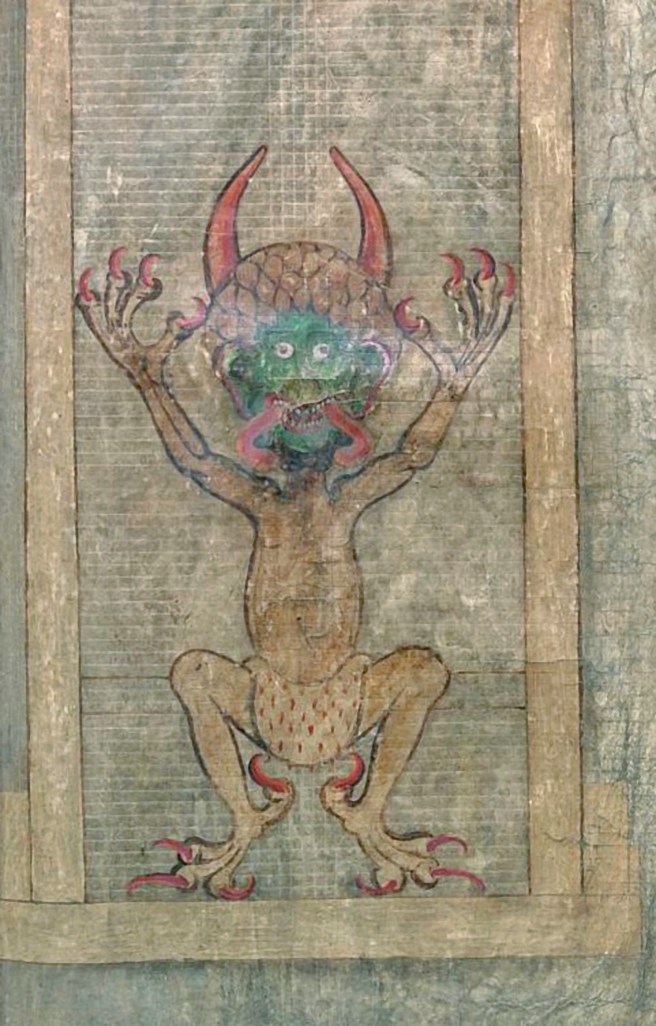
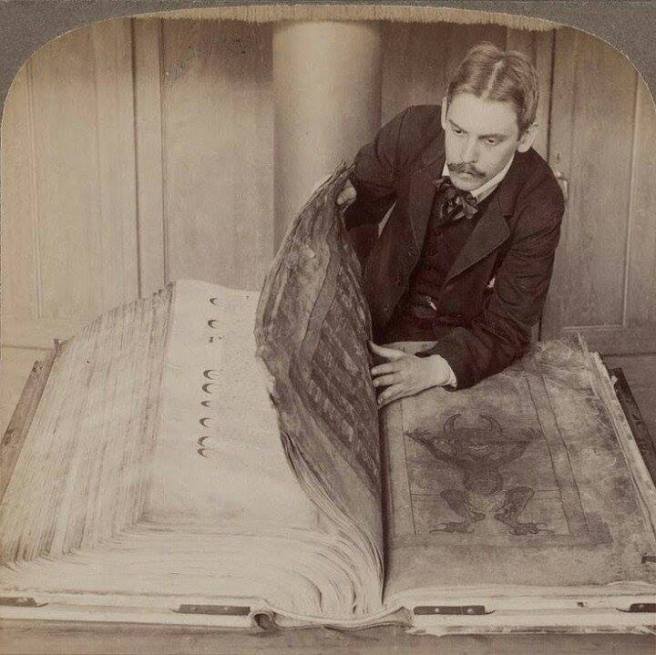
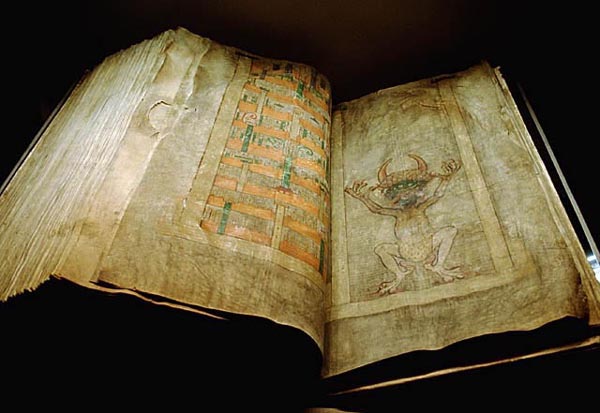
The Codex Gigas is the largest medieval text still in existence. Created in the Czech Republic during the early 12th century, the Codex Gigas is also known as the “Devil’s Bible” because it contains a large illustration of the Devil and details on how to exorcise evil spirits. It also contains a full-length Bible, known as the Vulgate Bible, among other texts.
This clawed beast is a portrait of the Devil as depicted in the Codex Gigas.
The tome is so large, the skins of over 150 calves were needed to create its 310 leaves of vellum pages. It is bound with wood, metal, and leather, and weighs over 150 pounds.
Incredibly, the entire Codex Gigas is thought to have been compiled by a solitary scribe: a Benedictine monk named Herman the Recluse.
Legends surrounding Herman the Recluse accuse him of breaking his monastic vows, leading the church to sentence him to being imprisoned alive within the monastery walls. The myth postulates that Herman the Recluse sought to avoid or postpone his horrible fate by promising to create a tome that would contain all of human knowledge and would make his monastery famous. He had one year to complete the task and, legend has it, he was able to do so on his own by making a pact with Lucifer, the devil, leading to the tome’s ironic nickname: The Devil’s Bible.
From the alchemical text Amphitheatrum sapientiae aeternae by Heinrich Khunrath 1595. The book mixes Christianity with alchemical magic and was condemned by the Sorbonne in 1625.






 Rat & Raven