“Wondrous Lady of the Moon You who greets the dark with silvered kisses Mistress of the night and all magicks, who rides the clouds in blackened skies and spills light upon cold Earth. Oh Lunar Goddess, Crescent one, Shadow maker and shadow breaker, Revealer of mysteries past and present, All-wise Lunar Mother Puller of seas and ruler of women, I greet your celestial jewel at the waxing of its powers with a rite in Your honor I pray by the moon .“
~Excerpts from The Magical and Ritual Use of Herbs by Richard Alan Miller~
In psychology, ritual is considered the celebration of a myth, which is achieved through a carefully constructed enactment of the myth. Because ritual is the externalization of something internal, myth has a more archetypal than logical structure to it. Rituals reveal values at their most fundamental level. Man expresses in ritual what moves him most. Therefore: The symbol always originates on the inside and is projected outward.
A rustic, preparing to devour an apple, was addressed by a brace of crafty and covetous birds:
“Nice apple that,” said one, critically examining it. “I don’t wish to disparage it — wouldn’t say a word against that vegetable for all the world. But I never can look upon an apple of that variety without thinking of my poisoned nestling! Ah! so plump, and rosy, and — rotten!”
“Just so,” said the other. “And you remember my good father, who perished in that orchard. Strange that so fair a skin should cover so vile a heart!”
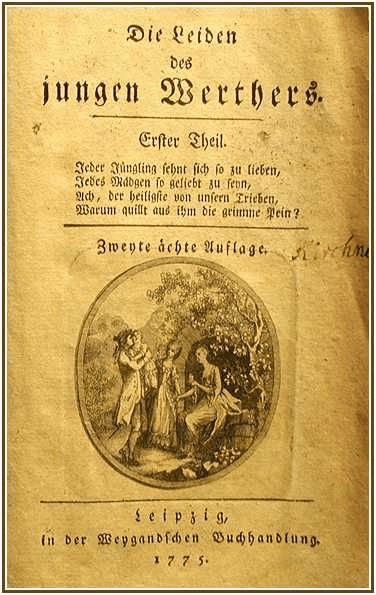
This inconspicuous looking text was the impetus behind a rash of suicides in the late 18th century. Written by Goethe, this epistolary novel followed the sorrows of a young man whose true love is betrothed to another. The book accounts the man’s decent into depression and ultimately suicide.
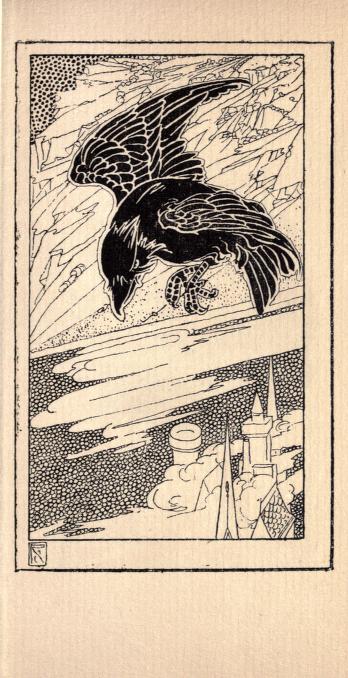
A Crow, ready to die with thirst, flew with joy to a Pitcher, which he saw at a distance. But when he came up to it, he found the water so low that with all his stooping and straining he was unable to reach it. Thereupon he tried to break the Pitcher; then to overturn it; but his strength was not sufficient to do either. At last, seeing some small pebbles lie near the place, he cast them one by one into the Pitcher; and thus, by degrees, raised the water up to the very brim, and quenched his thirst.”
Excerpts of H.P. Lovecraft’s The Rats in the Walls, 1924
~with~
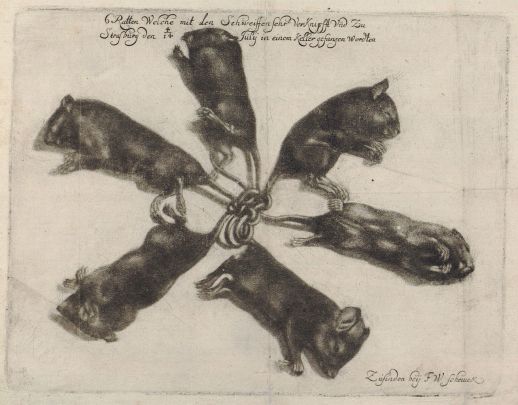
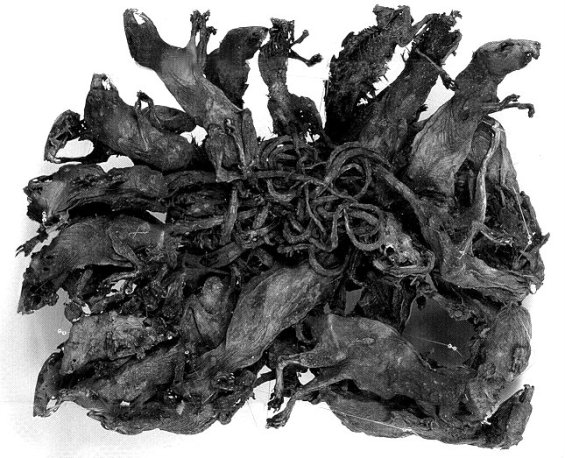
visions of the legendary Rattenkönig, the Rat King, 1683
God! those carrion black pits of sawed, picked bones and opened skulls! Those nightmare chasms choked with the pithecanthropoid, Celtic, Roman, and English bones of countless unhallowed centuries! Some of them were full, and none can say how deep they had once been. Others were still bottomless to our searchlights, and peopled by unnameable fancies. What, I thought, of the hapless rats that stumbled into such traps amidst the blackness of their quests in this grisly Tartarus?
6 Rat Rattenkonig, 1683
My searchlight expired, but still I ran. I heard voices, and yowls, and echoes, but above all there gently rose that impious, insidious scurrying; gently rising, rising, as a stiff bloated corpse gently rises above an oily river that flows under the endless onyx bridges to a black, putrid sea. Something bumped into me — something soft and plump. It must have been the rats; the viscous, gelatinous, ravenous army that feast on the dead and the living …
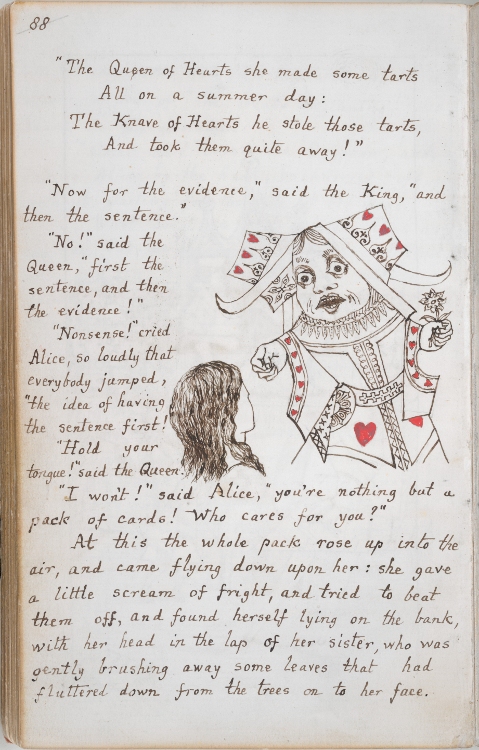
A hand-written page from Lewis Carrol’s original manuscript copy of what would be Alice’s Adventures in Wonderland. In 1863, when this page was written, the story was known as Alice’s Adventures Under Ground. Illustrations are by the author himself. From the British Library.
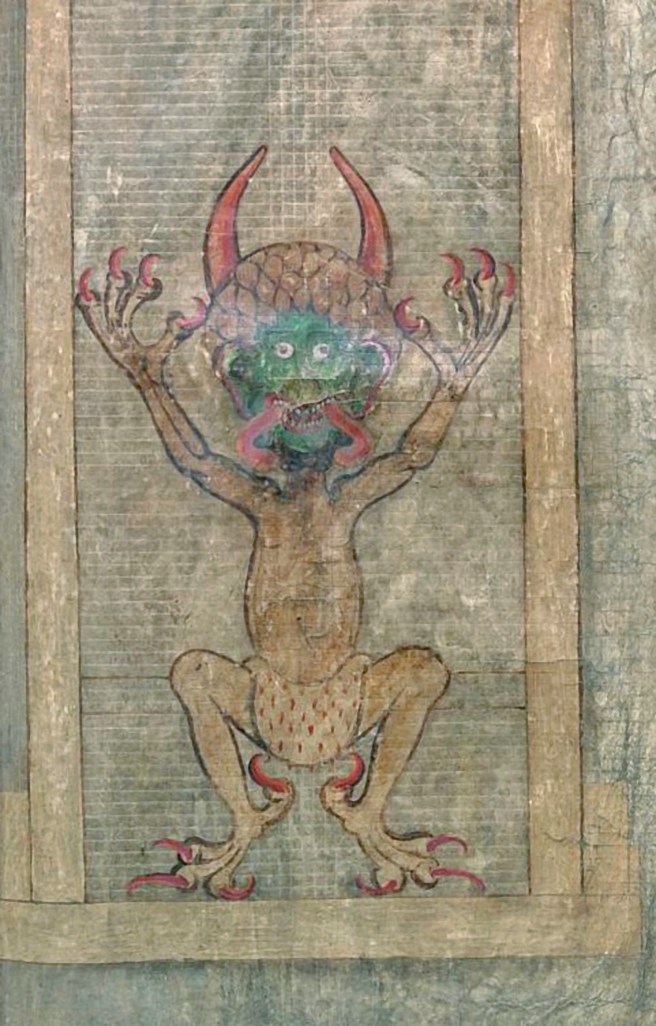
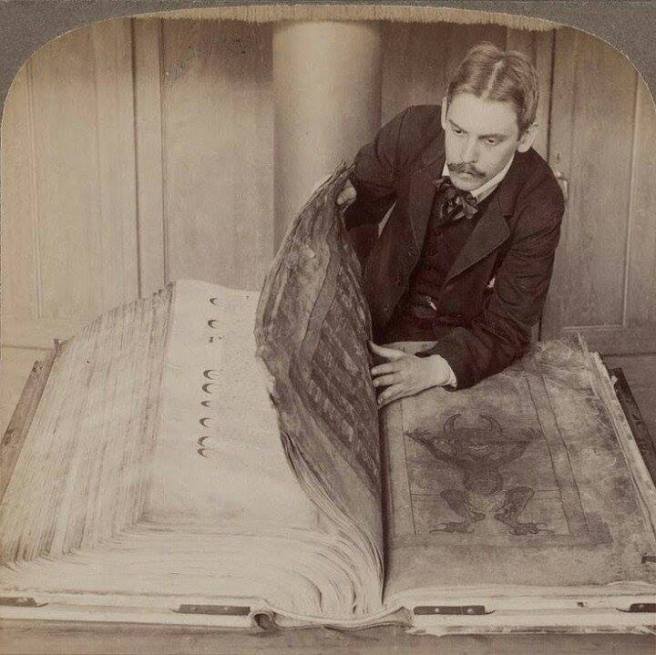
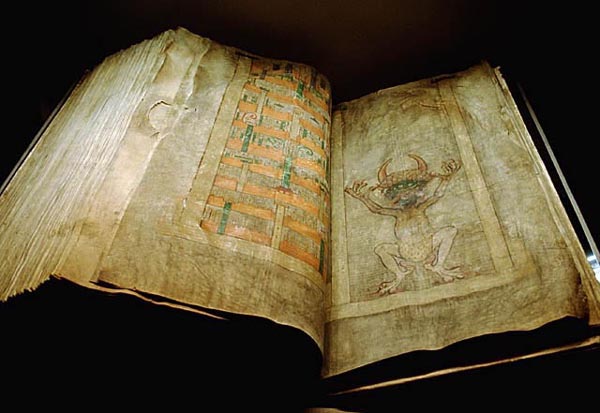
The Codex Gigas is the largest medieval text still in existence. Created in the Czech Republic during the early 12th century, the Codex Gigas is also known as the “Devil’s Bible” because it contains a large illustration of the Devil and details on how to exorcise evil spirits. It also contains a full-length Bible, known as the Vulgate Bible, among other texts.
This clawed beast is a portrait of the Devil as depicted in the Codex Gigas.
The tome is so large, the skins of over 150 calves were needed to create its 310 leaves of vellum pages. It is bound with wood, metal, and leather, and weighs over 150 pounds.
Incredibly, the entire Codex Gigas is thought to have been compiled by a solitary scribe: a Benedictine monk named Herman the Recluse.
Legends surrounding Herman the Recluse accuse him of breaking his monastic vows, leading the church to sentence him to being imprisoned alive within the monastery walls. The myth postulates that Herman the Recluse sought to avoid or postpone his horrible fate by promising to create a tome that would contain all of human knowledge and would make his monastery famous. He had one year to complete the task and, legend has it, he was able to do so on his own by making a pact with Lucifer, the devil, leading to the tome’s ironic nickname: The Devil’s Bible.




 Rat & Raven