
~ The Dissection Room at Cambridge University, 1888 ~
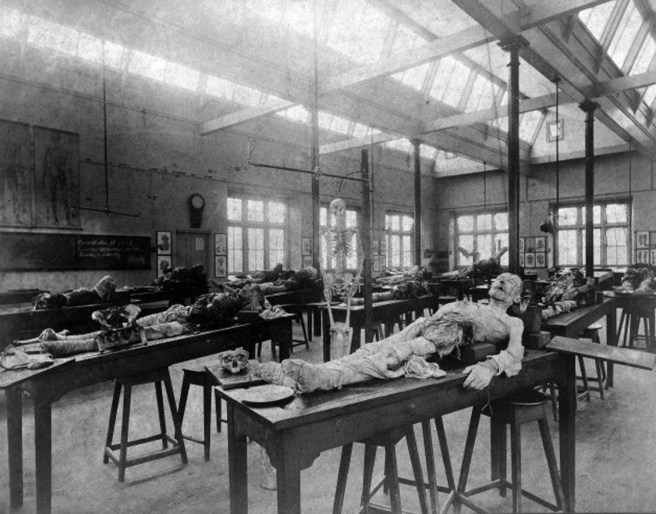

~ The Dissection Room at Cambridge University, 1888 ~
Six Adult Male Pah Ute Indian Skulls…
Dry plate. exposure 7 seconds each.

WAR DEPARTMENT, SURGEON GENERAL’S OFFICE, ARMY MEDICAL MUSEUM, WASHINGTON, D. C. Photograph No. 24 Negative No. 24
~ 1885 ~


Answer this enigma in the comments below by identifying the subjects referred to in italics. The first letter of each answer, when read together, spell out “January.” The first to answer correctly will be rewarded.
The God whom Artists always grace,
By giving him a double face;
The food divine, that’s eat on high,
By all the inmates of the sky;
Also the Liquor drank above,
Which Hebe hands, to mighty Jove;
He, who for fair Calypso’s smile,
Forgot his wife, and native isle;
Now Thetis’ son, who chose the strife,
Of warlike fame, instead of life;
That island, where we’re always told,
The brass Colossus stood of old;
The time, no efforts can regain,
Tho’ oft we spend its hours in vain.
Take the first letters and they’ll tell
A month, when firing pleases well.
Good luck.


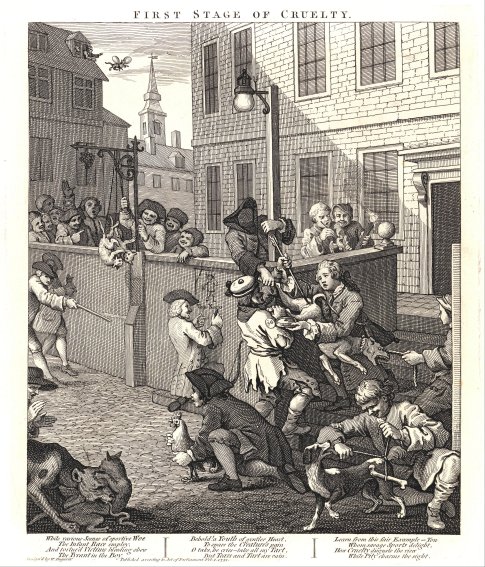
“While various Scenes of sportive Woe,
The Infant Race employ,
And tortur’d Victims bleeding shew,
The Tyrant in the Boy.
Behold! a Youth of gentler Heart,
To spare the Creature’s pain,
O take, he cries—take all my Tart,
But Tears and Tart are vain.
Learn from this fair Example—You
Whom savage Sports delight,
How Cruelty disgusts the view,
While Pity charms the sight.
~
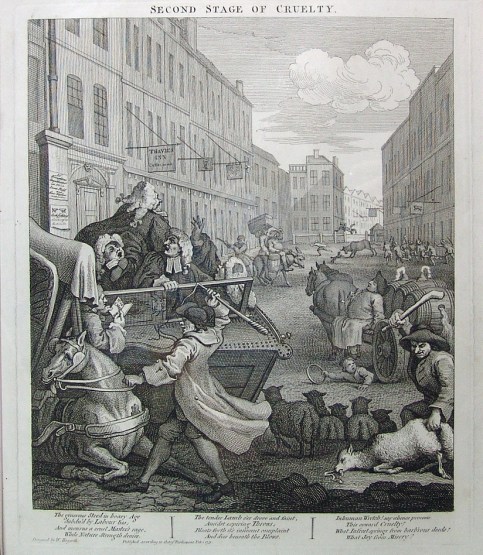
“The generous Steed in hoary Age,
Subdu’d by Labour lies;
And mourns a cruel Master’s rage,
While Nature Strength denies.
The tender Lamb o’er drove and faint,
Amidst expiring Throws;
Bleats forth it’s innocent complaint
And dies beneath the Blows.
Inhuman Wretch! say whence proceeds
This coward Cruelty?
What Int’rest springs from barb’rous deeds?
What Joy from Misery?”
~
Dear Tommy
My mistress has been the best of women to me, and my conscience flies in my face as often as I think of wronging her; yet I am resolved to venture body and soul to do as you would have me, so do not fail to meet me as you said you would, for I will bring along with me all the things I can lay my hands on. So no more at present; but I remain yours till death.
Ann Gill.”
~
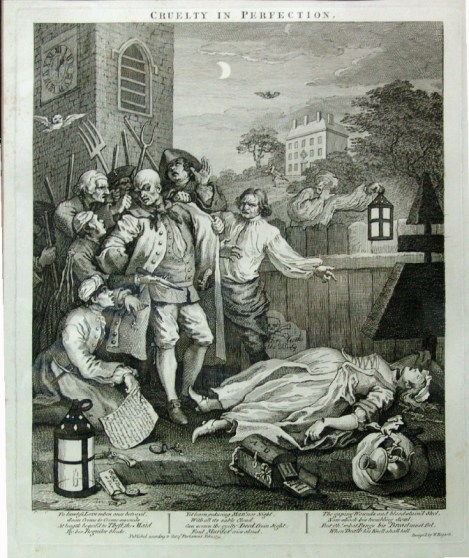
“To lawless Love when once betray’d.
Soon Crime to Crime succeeds:
At length beguil’d to Theft, the Maid
By her Beguiler bleeds.
Yet learn, seducing Man! nor Night,
With all its sable Cloud,
can screen the guilty Deed from sight;
Foul Murder cries aloud.
The gaping Wounds and bloodstain’d steel,
Now shock his trembling Soul:
But Oh! what Pangs his Breast must feel,
When Death his Knell shall toll.”
~
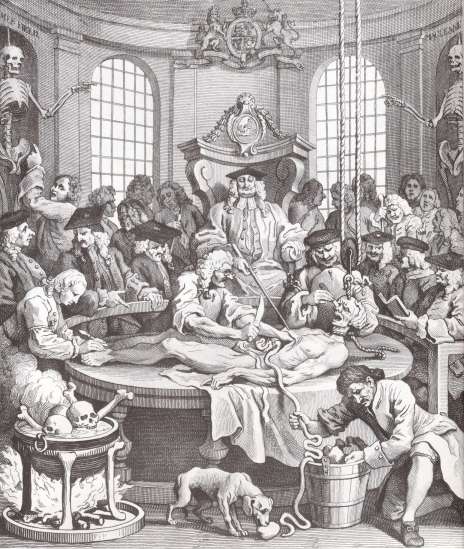
“Behold the Villain’s dire disgrace!
Not Death itself can end.
He finds no peaceful Burial-Place,
His breathless Corse, no friend.
Torn from the Root, that wicked Tongue,
Which daily swore and curst!
Those Eyeballs from their Sockets wrung,
That glow’d with lawless Lust!
His Heart expos’d to prying Eyes,
To Pity has no claim;
But, dreadful! from his Bones shall rise,
His Monument of Shame.”
I wish it had never been painted. There is indeed great skill in the grouping, and profound knowledge of character; but the whole effect is gross, brutal and revolting. A savage boy grows into a savage man, and concludes a career of cruelty and outrage by an atrocious murder, for which he is hanged and dissected.” ~ Allan Cunningham on The Four Stages of Cruelty.

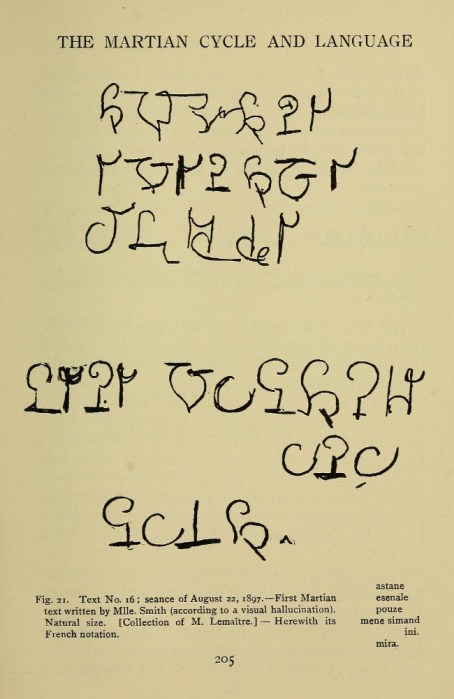
From India to the Planet Mars: A Study of a Case of Somnambulism with Glossolalia by TH Flournoy, 1900
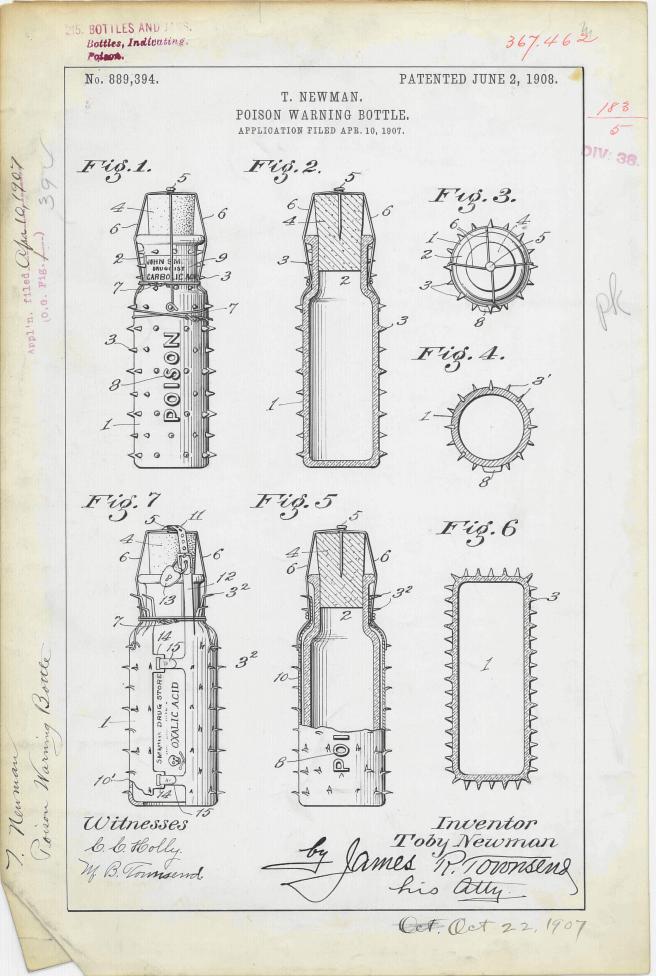

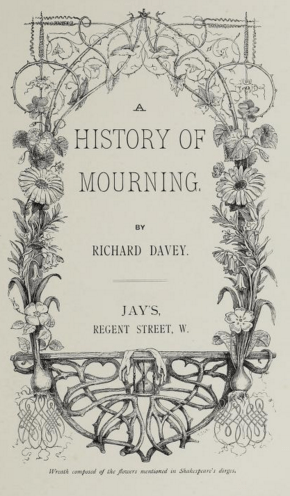
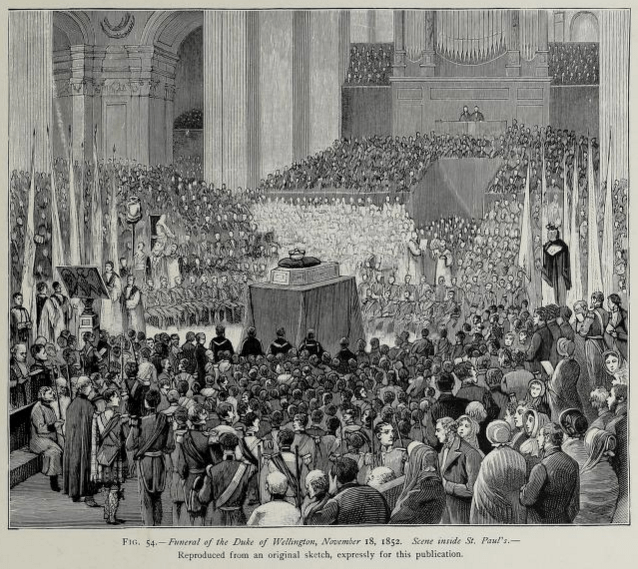
“Important personages in olden times in this country were usually embalmed. The poor, on the contrary, were rarely furnished even with a decent coffin, but were carried to the grave in a hired one, which, in villages, often did duty for many successive years. Once the brief service was said, the pauper’s body, in its winding-sheet, was placed reverently enough in the earth, and covered up- fact which doubtless accounts for the numerous village legends of ghosts wandering about in winding-sheets.”
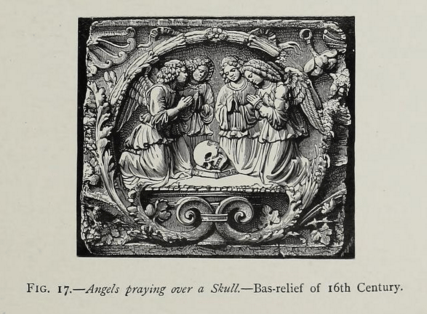
Another curious custom, which is now obsolete, was to put cloves, spikenard, fine herbs, and twigs of various aromatic shrubs into the coffin, in memory of the embalming of our Lord.”
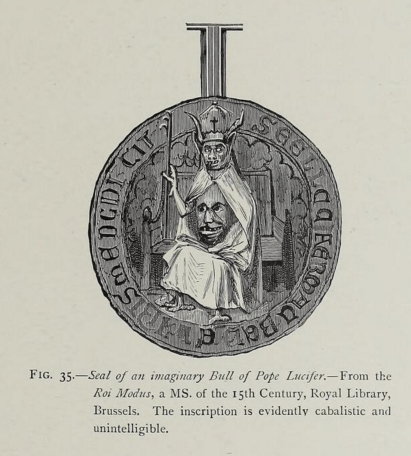
The funeral of a Pope is attended by many curious ceremonies, not the least remarkable of which is, that so soon as His Holiness’ death is thoroughly assured, the eldest Cardinal goes up to the body, and strikes it three times gently on the breast, saying in Latin, as he does so, ‘The Holy Father has passed away.'”
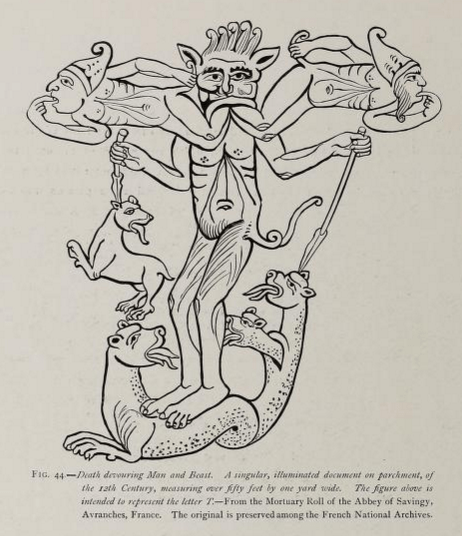
Perhaps the strangest funeral recorded in modern history was that of the translation of the remains of Voltaire, popularly known as his ‘apotheosis…’
In Voltaire’s lifetime it was boasted that he had buried the priests and the Christian religion, but now the priests were going to bury him, having very little of Christian religion left amongst them.”
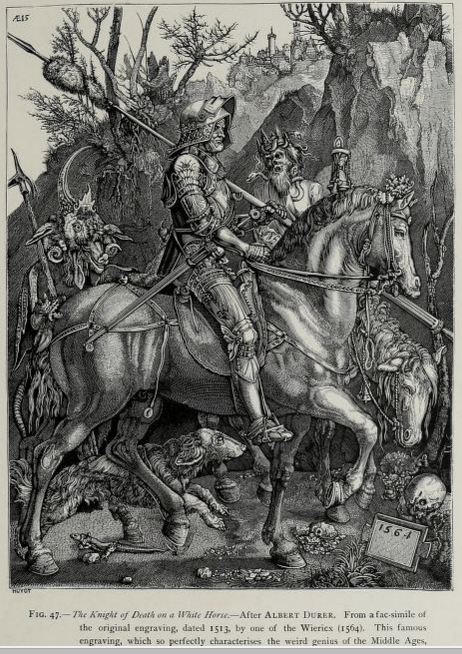
The following are the accepted reasons for the selection of various colours for mourning in different parts of the world: –
Black expresses the privation of light and joy, the midnight gloom of sorrow for the loss sustained. It is the prevailing colour of mourning in Europe, and it was also the colour selected in ancient Greece and in the Roman Empire.
Black and white striped expresses sorrow and hope, and is the mourning of the South Sea Islanders.
Greyish brown – the colour of the earth, to which the dead return. It is the colour of mourning in Ethiopia and Abyssinia.
Pale brown – the colour of withered leaves – is the mourning of Persia.
Sky-blue expresses the assured hope thta the deceased is gone to heaven, and is the colour of mourning in Syria, Cappadocia, and Armenia.
Deep-blue in Bokhara is the colour of mourning; whilst the Romans in the days of the Republic also wore very dark blue for mourning.
Purple and violet – to express royalty, ‘Kings and priests of God.’ It is the colour of mourning of Cardinals and of the Kings of France. The colour of mourning in Turkey is violet.
White – emblem of ‘white-handed hope.’ The colour of mourning in China. The ladies of ancient Rome and Sparta sometimes wore white mourning, which was also the colour for mourning in Spain until 1498. In England it is still customary, in several of the provinces, to wear white silk hat-bands for the unmarried.
Yellow – the scar and yellow leaf. The colour of mourning in Egypt and Burmah. In Brittany widos’ caps among the peasants are yellow. Anne Bolyn wore yellow mourning for Catherine of Arragon, but as a sign of joy.
Scarlet is also a mourning colour, and was occasionally worn by the French Kings, notably so by Louis XI.”


 Rat & Raven